Putting fingers to keys on a subject this controversial feels like sacrilege—especially as I sit in the rarefied air of coastal Maine, a place that has, for generations, staked its identity on the value of our most famous ocean delicacy. Living here, talking mess about lobster is something you just don’t do—not if you value your local economy, your friendships, the seasonal influx of tourism dollars, and, frankly, the survival of your community.
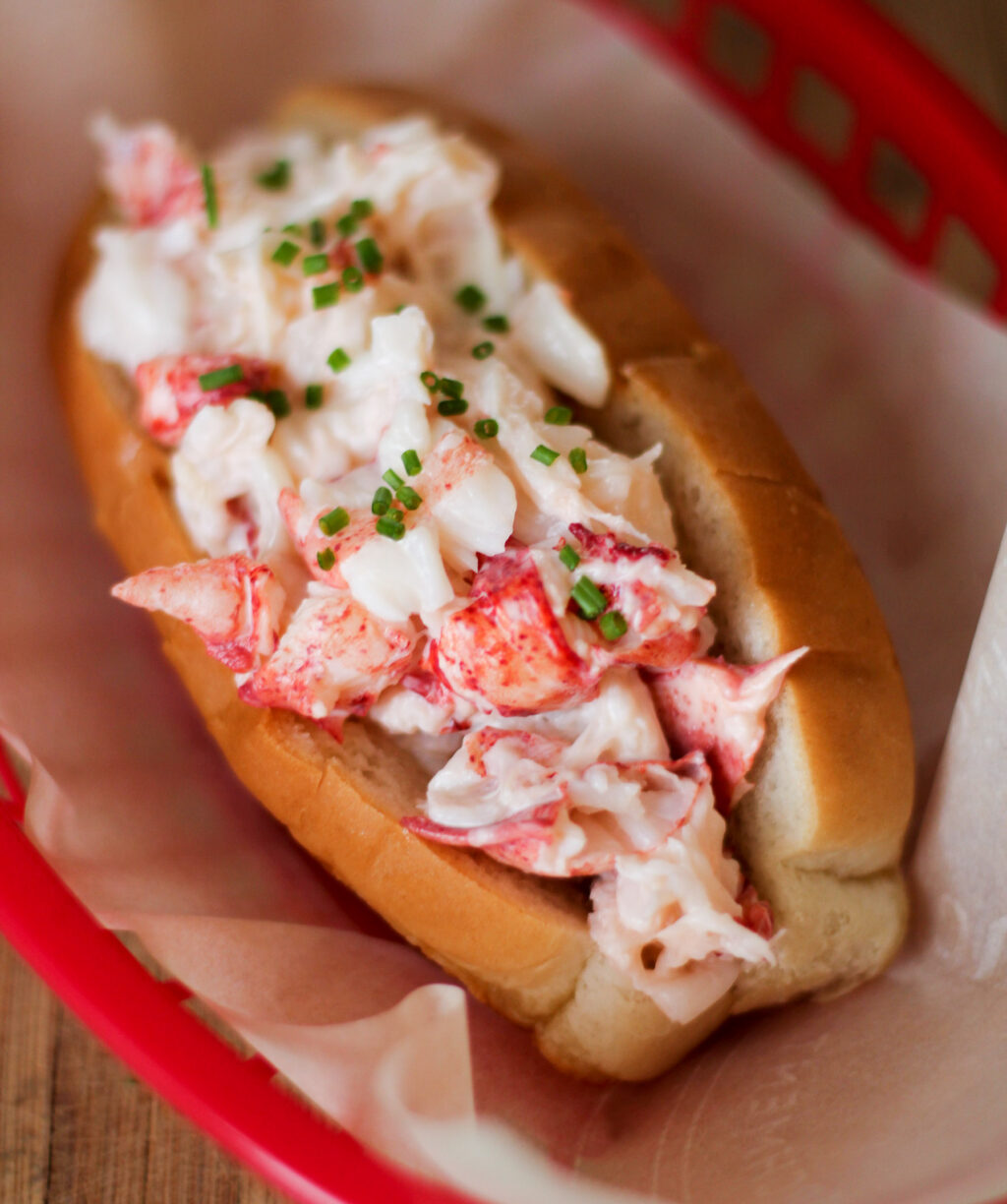
But here’s the thing: the average price for a lobster roll in Maine this summer is hovering around $38. And at a certain point, as wonderful as our state’s signature sandwich is, it’s just not really worth that.
Let me back up a second and talk about my credentials for making such a culturally violent statement.
I grew up in a tiny fishing village on the coast of Maine, where nearly everyone I knew was tied in some way to the fishing business. Childhood visits to friends’ houses meant navigating mazes of stacked traps in various states of repair, and most families earned a living from the ocean. My first job—as a soft, coddled 15-year-old—was at Atwood’s Lobster, a local processing plant filled with giant tanks where we unpacked live lobsters from crates, weighed them one at a time, sorted them by size, and dumped them into massive tanks—usually while a coffee-brandy-sodden foreman screamed inches from our faces and hurled dead lobster bodies at us if we weren’t moving fast enough. The bodies would explode on contact, leaving us soaked and stinking for the rest of the shift. We made $4 an hour.
As an adult, I still have close friends and family who make their living at sea, and I’ve seen firsthand how the rising cost of labor, bait, and fuel (as well as, many argue the overregulation of the industry), have pushed prices ever higher, even as less and less of that money seems to end up in the hands of the fishermen themselves. My wife is the last in a long line of Maine lobstermen, a salt-soaked bloodline built on the belief—shared by many here—that a better life can be carved out by anyone willing to work brutally hard in the early morning hours on the unforgiving Atlantic. Saying I respect the men and women who live this life isn’t just an understatement: it’s almost offensive in its inadequacy.
I’ve also spent a lot of time with lobster rolls.
Back when I was hustling for bylines on the world wide web, I wrote a series for Serious Eats that involved tasting nearly every lobster roll in the greater Portland area, documenting and photographing the differences in style and preparation. I’ve served as a judge for Boothbay Harbor’s annual “Claw Down,” where the region’s best chefs compete with their most imaginative lobster creations. I even entered a lobster roll in the World Food Championships in Las Vegas—earning a (respectable?) 13th place out of 50 competitors. And in my own work as a chef, I’ve made more than a few: on my food truck (where the high cost and fast spoilage made them a financial risk) and as kitchen manager of a small village market, where we hand-picked over 100 pounds of lobster daily and endured endless unsolicited customer critiques on whether we’d nailed the mayo ratio.
Too much. Not enough. And… that’s kind of it.
Because truthfully, there’s not much else to say about the “finer points” of lobster roll preparation.
Some people get hung up on whether the meat should be cut with a knife, swearing that the blade imparts a metallic taste (it doesn’t), or torn by hand. Don’t freeze the meat. Add seasonings, lettuce, or snipped chives at your peril; the lobster roll traditionalists among us will accuse you have having no idea what you’re doing, and that you should probably get back in your car and drive back to the wilds of Connecticut. And that’s kind of it. A great lobster roll isn’t complicated: it’s about clean, sweet lobster flavor, balanced by texture and temperature—cool lobster against a crisp, toasty bun.
It’s a great sandwich. I make a few for myself every summer, usually using my father-in-law’s most recent catch. I’ll sit in the sun, pet my fat dog, and think about how, for a few weeks each year, life here feels like magic.
But I’m not paying $38 for one. And I’m definitely not standing in line for an hour by a bridge in Wiscasset to get one. Or paying a markup for some scenery while I eat lunch. Here’s why.
If you break things down by value, it’s hard not think about the work my friend Melissa Kelly is doing at Primo, our neighborhood’s most-celebrated fancy-pants restaurant. Chef Kelly is the kind of chef whose food makes you stop and stare at your plate in silence afterward, grappling with the idea that you don’t actually know anything about food, and probably never will. She’s a multiple James Beard award nominee, and was one of the first people I can remember talking about “farm to table” anything. Her restaurant is at least one half farm, where she grows much of her own produce, and raises the animals she features on her menu. She is a local treasure, who also happens to be really kind and, for reasons that elude me, has always shown me respect for what I do in the kitchen.
Each year, on Primo’s menu, there is a celebration of pork. Though the dishes change each year, there are always a limited number of entrees which focus on the heritage breed pork Melissa raises each year, plates piled artfully high with tender, marbled slabs of pig that grew up listening to Mozart and being read stories at night, and which were ultimately butchered not with knives but somehow by the magic of Chef Kelly’s tender embrace, stacked with vegetables you’ve never heard of that have been roasted, tweezed, and stuffed with other vegetables, and drizzled with multiple purees of fruit, various reductions, hulled beans procured from the witch who lives in the ferngully at the end of West Meadow Road, a new kind of nut that I’m pretty sure she invented, and sometimes, garnished with freaking edible flowers. These plates are works of art.
The cost? Usually around $35.
So when I think about dropping that same amount of money on a single item, I ask myself what I’m actually paying for. A meal that took an army of people, acres of land, months of work, decades of experience, years of education, and the enviable levels of thoughtfulness and imagination found in a high-end restaurant kitchen? Or the boiled bugs that some sullen teenager mixed with mayonnaise with a vinyl-gloved hand in a plastic bus tub somewhere near a lighthouse?
It’s clear to me which way I’m going to go.
This isn’t to say lobster rolls aren’t good. They are. They have a rightful, even revered, place in Maine cuisine. But they’re not worth $38 bucks. Chances are, you should be making them yourself, with or without your fat dog, for a fraction of the cost, and saving your dining-out dollars for the kind of food you can’t replicate at home.

Malcolm is the co-author of “Eating in Maine: At Home, On the Town, and On the Road,” and chef/owner of Honey’s Fried Chicken Palace in Thomaston. He lives in Midcoast Maine and has spent the better part of two decades chasing good meals and even better stories.